Tuesday, March 17, 2015

FAMOUS DIRECTORS IN THE AMERICAN CINEMA

WOODY ALLEN

Allen Stewart Konigsberg was born on December 1, 1935 in Brooklyn, New York, to Nettie, a bookkeeper, and Martin Konigsberg, a waiter and jewelry engraver. His father was of Russian Jewish and Lithuanian Jewish descent, and his maternal grandparents were Austrian Jewish immigrants. Woody also has a sister, Letty, who was born in 1943. He has become an American film director, screenwriter, actor and author. He is best known for his romantic comedy films and for writing characters for his female stars.

Woody Allen changed his name to Heywood Allen when he was 17 years old. Allen started writing monologues and performing in comedy places while still he was in high school. He broke into show business at 15 years when he started writing jokes for a local paper. He later moved on to write jokes for talk shows but he felt that his jokes were being wasted.

He attended New York University in 1953. He had become to study a course in motion picture production. However, discouraged he dropped out of school and soon began writing for television. His most popular show was Your Show of Shows of Sid Caesar with which he won an Emmy Award nomination. Nevertheless, Woody was bored and soon tried his hand at stand-up comedy, becoming popular in the New York City comedy club circuit.

After performing on stage for a few years, he was approached to write a script for Warren Beatty to star in ¿What’s New, Pussycat? (1965) and would also have a moderate role as a character in the movie. During production, he gave himself more and better lines and left Beatty’s movie. It was from this experience that Woody realized that he could not work on a film without complete control over its production.

As a good writer and director, he often appeared in his own plays and films. After the Beatty’s movie, his first play was Don’t Drink the Water, on Broadway the following year. He made his directorial debut in 1966 with What’s Up, tiger Lily? However, his career really began with Take the Money and Run in 1969. Throughout his career, Allen wrote humorous short pieces. Some of them were published in the New Yorker magazine.


The most famous movies of Woody Allen are Annie Hall (1977) and Manhattan (1979). With the first one, his career came in 1977. He starred directed and co-wrote the movie with Marshall Bickman, and it went on to win four Academy Awards, including for best picture, best director and best screenplay. It is a movie with has both pleasure and pain. It is a comedy about a romance that ends sadly. This movie was followed with Manhattan, both of which were more serious than comedic.


Annie Hall also marked the beginning of a nine-picture collaboration with movie cameraman Gordon Willis. He continued to use different moviemaking techniques to create a new style for each new film. Moreover, he imitated the style of Italian director Federico Fellini in his next film Stardust Memories which he consider that is the best film he ever did.


Today he continues to write and direct many movies. You can look at his official website where there are his projects: http://www.woodyallen.com/


TIM BURTON
Timothy William Burton was born on August 25, 1958, in Burbank (California). Famed director, producer and screenwriter he was engrossed with the classic horror films of Roger Corman. After high school in 1976, he attended the California Institute of Arts where he also developed a penchant for drawing and enrolled at the Institute of Arts. After this, upon his graduation, he began working as an animator for Walt Disney Studios for less than a year.

However, Burton did not enjoy being an animator because the work requires talented artist, but they cannot deviate from the structured manner of drawing the characters. Although he found that the mainstream Disney movies he worked on (such as The Fox and the Hound) were far removed from his own sensibility, Disney let him have the freedom to work on his own personal projects.

His first film was the six-minute animated black-and-white Vincent (1982). The stop-motion animation illustrated a poem about a boy who dreams he is horror movie veteran Vincent Price, living within a horror movie. It even featured the voice of Price himself, Burton’s mentor.


In 1984, he created the only version of the Frankenstein story with the live-action short Frankenweenie. Due to the success, Paul Reubens commissioned Burton to direct the inventive comedy Pee-wee’s Big Adventure (1985). It was a successful movie which brought him a lot of opportunities, including the ghost story Beetlejuice that is one of the most famous fantasy and horror Burton’s movies. This film was an even bigger hit, and led to Warner Bross, offering Burton the job directing an eagerly awaited comic book adaptation that had been years in the planning.

Burtons used his new popularity to get an extremely personal project, Edwar Scissorhands made, which is another of his success, greently by 20th Century Fox. For the first time, he had full creative control, having written the story and also produced the film. He was awarded the distinction of film artist. This was the first time that Burton used Johnny Deep in one of his films, a relationship that has continued until this day. It also marked the beginning of Burton being taken seriously as an artist.

Later, he formed his own production company in which he directed the Batman production in 1989. It was the first movie to sell $100 million in the first 10 days of release. In 1992, Burton reteamed Batman sequel, Batman Returns.

Another important production was the animated musical Tim Burton’s The Nightmare Before Christmas that was created with the painstaking process of stop-motion animation. An affectionate tribute to the supposed worst moviemaker of all time, it was not a hit at the box office, but won Burton the best reviews of his career, as well as two Oscars. It was followed by an indirect homage to Wood’s movies, Mars Attacks! The movie was a disappointment at the box office but has gained a cult status over the years. Burton made something of a comeback three years later with his first real horror movie, Sleepy Hollow.

In 2001, Burton remade the classic Planet of the Apes, on the set of which he mat Helena Bonham Carter, who is now her couple.

Burton did not use to do personal movies because they are not always rewarded with great box office success. However, after his parents died in quick succession, Burton made Big Fish (2003), the story of a man trying to reconnect with his dying father.

Charlie and the Chocolate Factory included Depp and Willy Wonka, and proved one of the most successful blockbusters of 2005. It was followed two months later by the release of the stop motion animated movie, Corpse Bride. Both movies generally received good reviews, and the second one was even nominated for an Oscar for Best Animated Feature. In 2010, Burton followed the animated feature p with the 3D Alice in Wonderland.


In 2012, Burton reunited once again with Depp for the adaptation for the popular television show Dark Shadows.  The same year, was also memorable for him because he finally had the opportunity to turn his short (27 minutes) Frankenweenie into a full-length feature film.

There are rumors that he wants to take time off to be with his family. However, he has no less than eight movies currently in development, either as producer and/or director.

In addition to his movie work, Burton exhibited over 700 drawings, paintings and other artwork at New York City’s Museum of Modern Art. For more information visiting his official website: http://www.timburton.com/

BIBLIOGRAPY:

Monday, March 9, 2015


Famous people in the world of cinema. This week…

              Walt Disney and Charles Chaplin!! 


WALT DISNEY


Walt Disney was an America motion-picture and television producer. He was famous as a pioneer of cartoon films and as the creator of Disneyland.

QUICK FACTS
NAME
Walt Disney
OCCUPATION
 Producer
BIRTH DATE
 December 5, 1901
DEATH DATE
December 15, 1966
EDUCATION
 Kansas City Art Institute and School of Design, Mcklinley High School, Chicago Art Institute
PLACE OF BIRTH
Chicago, Illinois
PLACE OF DEATH
 Burbank, California
AKA
Walt Disney
FULL NAME
Walter Elias Disney


Walter Elias Disney was born on December 5, 1901. He and his brother Roy co-founded Walt Disney Productions, which became one of the best-known motion-picture production companies in the world. Disney was the creator of  the cartoon character Mickey Mouse. He won 22 Academy Awards during his life, and was the founder of theme parks Disneyland and  Disney World.
His brother Roy got him a job at the Pesmen-Rubin Art Studio, where he met the cartoonist  Ub Iwerks. Disney worked at the Kansas City Film Ad Company, where he made commercials based on  animation. Around this time, Disney began experimenting with a camera, doing hand-drawn animation, and he decided to open his own animation business. From the company.
Walt made a deal with a local Kansas City theater to screen their cartoons, which they called Laugh-O-Grams. The cartoons were very popular and Disney was able to acquire his own studio, upon which he bestowed the same name. Laugh-O-Gram hired a number of employees. They did a series of seven-minute fairy tales that combined  live action and animation, which they called Alice in Cartoonland.
Disney and his brother, Roy, soon joined their money and moved to Hollywood and to began the Disney Brothers' Studio. Their first deal was with New York distributor Margaret Winkler, to distribute their Alice cartoons. They also invented a character called Oswald the Lucky Rabbit.
In 1925, Disney toke on an  artist named Lillian Bounds and the couple married.
Mickey Mouse

He decided to produce three cartoons featuring a new character Walt had been developing called Mickey Mouse. The first animated shorts of Mickey were Plane Crazy, a silent film for which they failed to find distribution. When sound made its way into film, Disney created a third, sound-and-music-equipped short called Steamboat Willie. With Walt as the voice of Mickey, the cartoon was an instant sensation. 


In 1929, Disney created Silly Symphonies, which featured Mickey's newly created friends, including Minnie Mouse, Donald Duck, Goofy and Pluto. One of the most popular cartoons, Flowers and Trees, was the first to be produced in color and to win an Oscar. In 1933, The Three Little Pigs and its title song "Who's Afraid of the Big Bad Wolf?" became a theme.
Disneyland Park opened in the summer of 1955. It became known as a place where children and their families could explore, take rides and meet the Disney characters. 

Disneyland


In a very short time, the park had increased its investment and was entertaining tourists from around the world. With the original site having some attendance ups and downs over the years, Disneyland has expanded its rides over time and branched out globally with parks in Tokyo, Paris and Hong Kong, with a Shanghai location slated to open in December 2015.


Within a few years of the opening, Disney began plans for a new theme park and Experimental Prototype Community of Tomorrow in Florida. It was still under construction when, in 1966, Disney was diagnosed with lung cancer. He died on December 15, 1966, at the age of 65. After his brother's death, Roy carried on the plans to finish the Florida theme park, which opened in 1971 under the name Walt Disney World.


CHARLES CHAPLIN


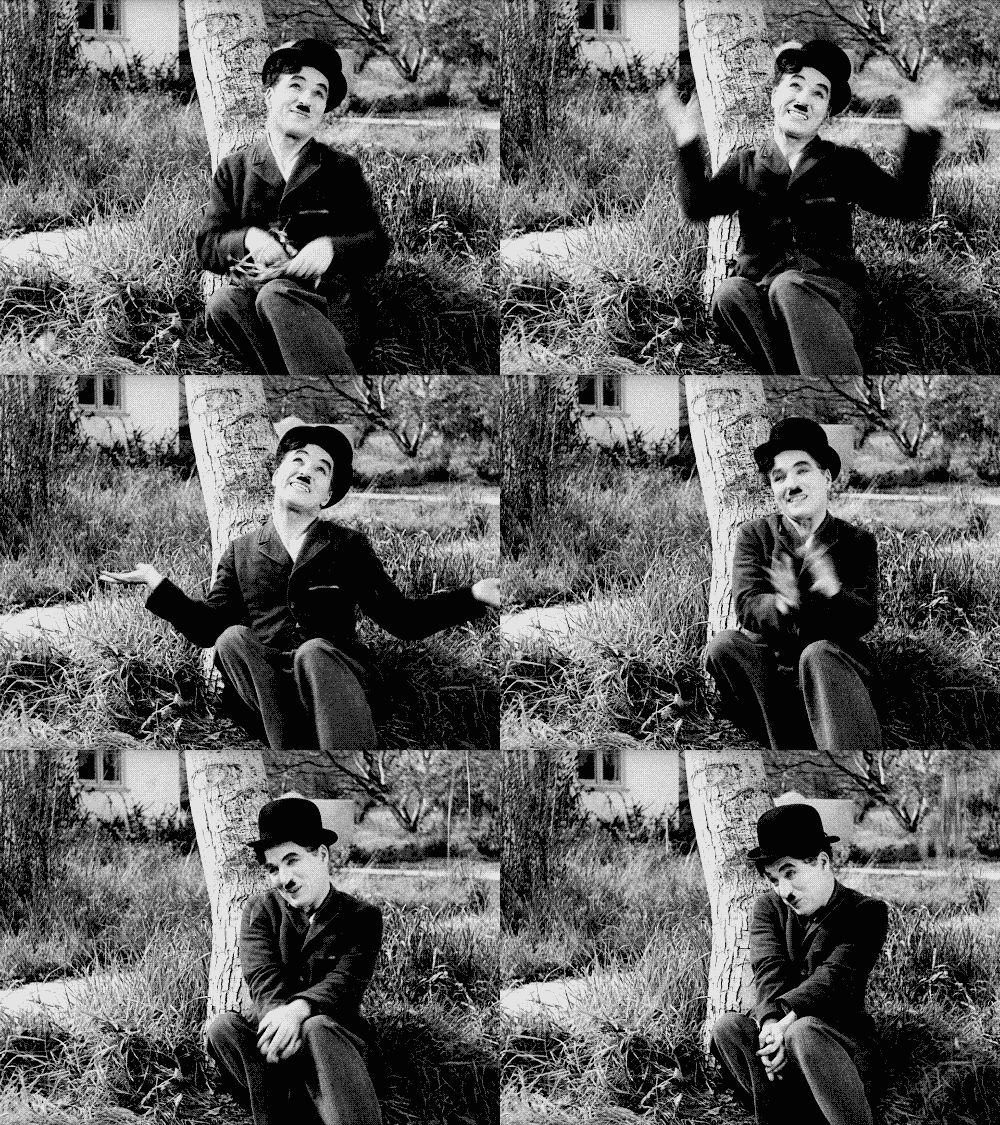
He was born on April 16, 1889, in London, England. Charlie Chaplin worked with a children's dance troupe before making his mark on the big screen. His character "The Tramp" relied on pantomime and quirky movements to become an iconic figure of the silent-film era. Chaplin went on to become a director, making films such as City Lights and Modern Times, and co-founded the United Artists Corporation. He died in Corsier-sur-Vevey, Vaud, Switzerland, on December 25, 1977.

Beginning of his career  


When he was about twelve, he got his first chance to act in a legitimate stage show, and appeared as
"Billy" the page boy, in support of William Gillette in "Sherlock Holmes". At the close of this engagement, Charlie started a career as a comedian in vaudeville, which eventually took him to the United States in 1910 as a featured player with the Fred Karno Repertoire Company.

Film Career
In 1914 Chaplin made his film debut in a somewhat forgettable one-reeler called Make a Living. To differentiate himself from the clad of other actors in Sennett films, Chaplin decided to play a single identifiable character, and "The Little Tramp" was born, with audiences getting their first taste of him inKid Auto Races at Venice (1914).
Over the next year, Chaplin appeared in 35 movies. During his first year with the company, Chaplin made 14 films, including The Tramp (1915). Generally regarded as the actor's first classic, the story establishes Chaplin's character as the unexpected hero when he saves the farmer's daughter from a gang of robbers.
By the age of 26, Chaplin, just three years removed from his vaudeville days, was a superstar. He'd moved over to the Mutual Company, which paid him a whopping $670,000 a year. The money made Chaplin a wealthy man, but it didn't seem to derail his artistic drive. With Mutual, he made some of his best work, including One A.M. (1916), The Rink (1916), The Vagabond (1916) andEasy Street (1917).
Through his work, Chaplin came to be known as a grueling perfectionist.
But the results were hard to refute. During the 1920s Chaplin's career blossomed even more. During the decade he made some landmark films, including:
 The Kid (1921)
The Pilgrim (1923)
A Woman in Paris (1923)
The Gold Rush (1925)
The Circus (1928).

Final Years
Nearing the end of his life, Chaplin did make one last visit to the United States in 1972, when he was given an honorary Academy Award. The trip came just five years after Chaplin's final film, A Countess from Hong Kong (1967), the filmmaker's first and only color movie. Despite a cast that included Sophia Loren and Marlon Brando, the film did poorly at the box office. In 1975, Chaplin received further recognition when he was knighted by Queen Elizabeth. In the early morning hours of December 25, 1977, Charlie Chaplin died at his home in Corsier-sur-Vevey, Vaud, Switzerland. His wife, Oona, and seven of his children were at his bedside at the time of his passing. In a twist that might very well have come out of one of his films, Chaplin's body was stolen not long after he was buried from his grave near Lake Geneva in Switzerland by two men who demanded $400,000 for its return. The men were arrested and Chaplin's body was recovered 11 weeks later.
Bibliography:
http://www.biography.com/people/walt-disney-9275533#disneyland
http://www.anb.org/articles/18/18-00309.html
http://www.biography.com/people/charlie-chaplin-9244327
http://www.charliechaplin.com/en/biography/articles/21-Overview-of-His-Life


Thursday, March 5, 2015

NOMINEES AND WINNERS OSCAR 2015

Did you watch the ceremony? If not, here it is:


LIST OF WINNERS:
Best supporting actor: JK Simmons for Whiplash
Best supporting actress: Patricia Arquette for Boyhood
Best foreign-language film: Ida – Paweł Pawlikowski
Best director: Alejandro González Iñárritu for Birdman
Best actor: Eddie Redmayne for The Theory of Everything
Best actress: Julianne Moore for Still Alice
Best picture: Birdman
Achievement in costume design: The Grand Budapest Hotel – Milena Canonero
Achievement in makeup and hairstyling: The Grand Budapest Hotel – Frances Hannon, Mark Coulier
Best documentary short subject: Crisis Hotline: Veterans Press 1 – Ellen Goosenberg Kent, Dana Perry
Achievement in sound mixing: Whiplash – Craig Mann, Ben Wilkins, Thomas Curley
Achievement in sound editing: American Sniper – Alan Robert Murray, Bub Asman
Achievement in visual effects: Interstellar – Paul J Franklin, Andrew Lockley, Ian Hunter, Scott R Fisher
Best animated short film: Feast – Patrick Osborne, Kristina Reed
Best animated feature film: Big Hero 6
Best production design: The Grand Budapest Hotel: Adam Stockhausen, Anna Pinnock
Achievement in cinematography: Birdman: Emmanuel Lubezki
Best original song: Glory from Selma – Lonnie Lynn (Common), John Stephens (John Legend)
Original screenplay: Alejandro González Iñárritu, Nicolás Giacobone, Alexander Dinelaris, Armando Bo – Birdman


Where? The 87th Academy Awards took place on Sunday 22nd February in Los Angeles. The ceremony began at 8:30pm (1:30am in Europe)

Who did host the ceremony? The star Neil Patrick Harris (Gone Girl and How I Met your Mother) hosted the Oscars for the first time.  Harris kicked off the proceedings on an edgy note, saying it was a night to celebrate "Hollywood's best and whitest - sorry, brightest" - a cutting reference to this year's total lack of non-white acting nominees.


But the reaction on Twitter to his efforts has been mainly negative; Journalist Tina Brown (from The Daily Beast y Newsweek) called him "smirking" and "clueless", while Empire Magazine's Chris Hewitt said: "As star of How I Met Your Mother, Neil Patrick Harris has form with unfunny formats being stretched out beyond their natural finishing line."


YOU HAVE TO KNOW...


Best Picture: Birdman

Director: Alejandro Gonzalez Inarritu

Cast includes: Michael Keaton, Emma Stone, Edward Norton, Naomi Watts, Lindsay Duncan, Andrea Riseborough

What's the story? In this black comedy, former movie superhero actor Riggan Thomson (Keaton) hopes to revive his washed up career by putting on Broadway play.

Fact: Using some clever camerawork, the film looks as though it was shot in a single take.

What the critics say: "The director's surrealist portrait of modern times and the cult of celebrity is brilliant on so many levels that even the occasional downdraft can't keep Birdman from soaring." Betsey Sharkey, LA Times


Who are them?


Alejandro González Iñárritu (born August 15, 1963) is a Mexican film director, screenwriter, film producer, and composer. His five feature films – Amores perros (2000), 21 Grams (2003), Babel (2006), Biutiful (2010) and Birdman (2014) – have gained critical acclaim worldwide and have received multiple Academy Award nominations. He won three Academy Awards in 2015 for Best Director, Best Original Screenplay, and Best Picture for Birdman.


The Mexican director dedicated his best picture win for “Birdman” to his fellow Mexicans, and called on his countrymen to “find and build a government that we deserve.”

Regarding Mexicans living in the United States, he was more forceful: “I just pray they can be treated with the same dignity and respect of the ones that came before and built this incredible, immigrant nation.''


Eddie Redmayne: (born 6 January 1982) is an English actor, singer and model. He started his professional career as an actor in both theatre and television roles in the early 2000s and then made his film debut, Like Minds, in 2006.
He has since appeared in such prominent films as The Good Shepherd (2006), Elizabeth: The Golden Age (2007), My Week with Marilyn (2011), Les Misérables (2012), The Theory of Everything (2014), and Jupiter Ascending (2014). Redmayne received universal critical acclaim for his performance as Stephen Hawking in The Theory of Everything, for which he has won the Academy Award for Best Actor, the Golden Globe Award, the Screen Actors Guild Award and the BAFTA Award. He has also continued to perform in theatre, most notably in the play Red (2010), on Broadway, for which he won the Tony Award for Best Performance by a Featured Actor in a Play.

He attended Colet Court then Eton College, where he was in the same year as Prince William, Tom Hiddleston and Ivo Stourton. He went on to study history of art at Trinity College, Cambridge, from where he graduated with 2:1 Honours in 2003.


Julianne Moore is an American-British actress and children's author. Prolific in cinema since the early 1990s, Moore is particularly known for her portrayals of emotionally troubled women. Her career has involved both art house and Hollywood films.
Moore received considerable recognition in the late 1990s and early 2000s, earning Oscar nominations for Boogie Nights (1997), The End of the Affair (1999), Far from Heaven (2002), and The Hours (2002). Other notable film appearances include The Big Lebowski (1998), Magnolia (1999), Hannibal (2001), Children of Men (2006) and A Single Man (2009). She continued to work regularly in the 2010s, appearing in the popular Hunger Games series and receiving praise for her performances in The Kids Are All Right (2010), Maps to the Stars (2014), and Still Alice (2014), for which she has won the Academy Award, Golden Globe Award, Screen Actors Guild Award and BAFTA Award for Best Actress. In the television film Game Change (2012), she portrayed Sarah Palin and received the Emmy Award, Golden Globe Award, and Screen Actors Guild Award for Best Actress.
In addition to acting, Moore has written a successful series of children's books. She is married to the director Bart Freundlich, with whom she has two children.

BIBLIOGRAPHY:

http://www.latimes.com/local/lanow/la-me-ln-irritu-oscar-speech-20150222-htmlstory.html
http://www.bbc.com/news/entertainment-arts-30681208
http://oscar.go.com/
http://www.independent.co.uk/arts-entertainment/films/oscars/oscars-2015-what-date-do-the-awards-take-place-and-how-can-you-watch-them-in-the-uk-10042201.html
http://web.orange.co.uk/article/news/neil_patrick_harris_nervous_and_boring
http://en.wikipedia.org/wiki/Julianne_Moore
http://en.wikipedia.org/wiki/Eddie_Redmayne
http://es.wikipedia.org/wiki/Alejandro_Gonzalez_Inarritu
http://www.telegraph.co.uk/culture/film/oscars/11419924/oscars-2015-live.html
http://www.smh.com.au/entertainment/oscars/oscars-2015-live-winners-and-highlights-of-the-87th-academy-awards-ceremony-20150223-3qrby.html


Sunday, March 1, 2015

OSCARS... WHAT ABOUT THEIR HISTORY?


The history of the Oscars begins on May 16, 1929. It was officially known as the Academy of Motion Picture Arts and Sciences Awards. The award ceremony was originally an attempt to help Hollywood improve its tawdry image, but it has grown to become the highest critical honor for cinematic professionals, in addition to one of the biggest public events on the Hollywood calendar.


The First Oscar Ceremony: 
The first Oscar award ceremony was held at the Hollywood Roosevelt Hotel in 1929. The first Academy president was the actor Douglas Fairbanks, who found himself very busy over the course of the ceremony, as he was handing out the statuettes by himself.

In contrast to the secrecy surrounding contemporary Oscar ceremonies, the first ceremony held no suspense, as the winners had been announced three months earlier. The statuettes were handed out quickly because most of the nominees and winners didn't go to the event.

Emil Jennings
The first of the 15 total statuettes handed out was received by the German actor Emil Jennings. He had plans to leave the country before the ceremony, and that is why he received his award early. This makes him the first person to ever receive an Oscar.


Janet Gaynor became the first woman winner of the Academy Award for best actress for her performance in three films: 7th Heaven, Sunrise: A song of two Humans and Street Angel. This was the only occasion on which an actress has won one Oscar for multiple film roles. 


Janet Gaynor


Evolution of the Oscars: 
The first Oscar award ceremony was the only one not to be broadcast publically. By the second year, the ceremony was being broadcast on radio. In 1953, the ceremony was broadcast on TV for the first time. In 1969 the broadcast went worldwide.


From 1929 to 1940, newspapers received the list of Oscar winners before the ceremony. This arrangement was done so the papers could publish the list in the evening edition, right after the award ceremony finished. 


The arrangement work well enough until 1940, when the Los Angeles Times published the winners early-before the actual ceremony. The Academy implemented a sealed-envelope method the following year, an approach that has worked so well that has been used ever since.


Evolution of the Oscar Statuette:

Margaret Herrick
The term "Oscar", came about by accident. It is used to refer to the little statuettes received by winners. It is believed that the academy librarian Margaret Herrick made an innocent comment that the little statue, which was named the Academy Award of Merit, looked like her uncle Oscar. The nickname stuck and it is now the general term most people use to refer to both the Academy of Motion Picture Arts and Science Awards and the actual awards ceremony. 


The actual Oscar award is 13 1/2 inches tall (34,3 cm). The very first Oscars were created from solid bronze. During the World War II, Oscars were made of plaster to help conserve resources. Nowadays, the statuette is gold plated and heavy, weighing in at about 8 pounds (3,6 kg).


The Oscar Academy:
The people who decide on the nominations and winners of the Oscars are known as the Academy of Motion Picture Arts and Sciences. The original academy had only 36 members. Currently, the academy boasts around 6,000 members. 

Academy membership is limited to film artists working in the production of theatrically-released motion pictures. The Academy’s membership process is by sponsorship, not application.  Candidates must be sponsored by two Academy members from the branch to which the candidate seeks admission. In addition, Academy Award nominees are automatically considered for membership and do not require sponsors. 
Membership review takes place once a year, in the spring.
The Academy has 17 branches, for the crafts ranging from Actors to Writers, and two categories, Members-at-Large and Associates to accommodate individuals who work in motion picture production but do not fit into one of the branches.


THE ORIGIN OF OSCAR


BIBLIOGRAPHY: 
Oscars Ceremonies:  http://www.oscars.org/oscars/ceremonies/1929 [Access 20/02/2015]
The Oscars: http://oscar.go.com [Access 20/02/2015]
Oscars: http://www.oscars.org/ [Access 20/02/2015]
YouTube: https://www.youtube.com/watch?v=_thW3N98cFQ [Access 27/02/2015]